India and Saleem as twins
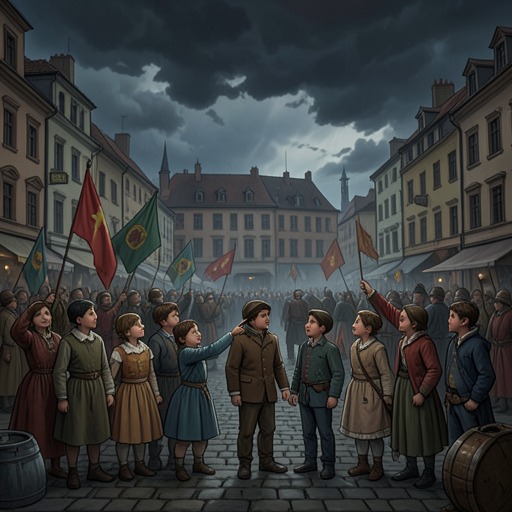
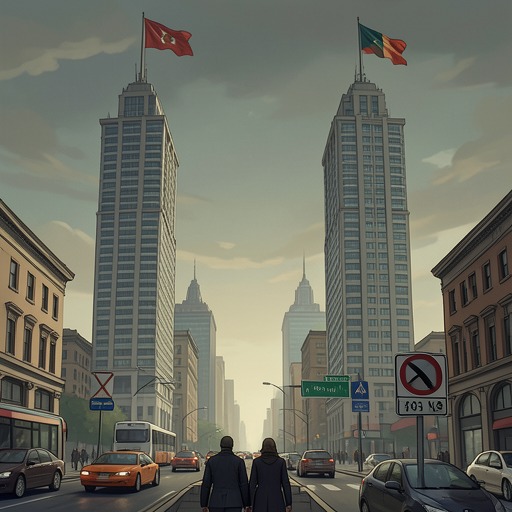
Midnight's ChildrenIndia and Saleem as twins is the novel’s central imaginative pairing: Saleem Sinai is born at the precise moment India becomes independent, and his life is made to run alongside the history of his nation. The conceit enlarges a childhood story into a national one, while Saleem’s extravagant conviction that events occurred because of him makes the bond at once comic, intimate, and tragic.
The pairing’s design
The novel’s author recalls that Saleem began as a minor character in an abandoned draft, but placing him at the center of a new work changed its scale. Because he was born at midnight on the day of Indian independence, his story could not remain only a story of childhood. To pair the boy and the country required telling the histories of both twins: personal and national time would unfold together.
The parallel is not simply chronological. Saleem is a striver for meaning, and the idea that India’s modern history happened because of him gives that desire its most audacious form. He treats the nation’s life as somehow his fault, turning the relation between individual and country into a claim of causation as well as resemblance. The narrator’s confidence is knowingly excessive: the novel’s voice emerges as comically assertive and relentlessly talkative, with pathos growing out of the tragedy of that overclaim.
A birth made historical
Saleem’s opening account insists on the exactness of his arrival: he is born at Doctor Narlikar’s Nursing Home on August 15, 1947, on the stroke of midnight, at the instant India arrives at independence. Outside the window are fireworks and crowds; seconds later, his father breaks a toe. The brief contrast places an ordinary mishap beside the immense national occasion, while the clocks’ joining hands lend the moment an almost ceremonial force.
Saleem describes the consequence as being handcuffed to history, his destiny indissolubly chained to that of his country. The bond is imposed before he can choose it: soothsayers have prophesied him, newspapers celebrate his arrival, and politicians ratify his authenticity. He says he has been left without a say in the matter, and the helplessness sits beside his later insistence on being central to events. His nicknames, from Snotnose and Stainface to Sniffer, Buddha, and Piece-of-the-Moon, further set the grand historical identity against the vulnerable, comic body of a child who cannot yet wipe his own nose.
The body as national image
The novel makes the twinship visible through an imposed bodily comparison. In a lesson in “human geography,” the sadistic geography teacher Emil Zagallo compares Saleem’s nose to the Deccan peninsula. The joke connects the child’s body to the shape of India, but its cruelty matters: the author identifies the joke as his own as well as the teacher’s. The national metaphor is therefore not a neutral resemblance; it is also an act of comic violence, an example of how the story’s large claims are made through a vulnerable individual.
This bodily correspondence helps explain the pairing’s distinctive tension. Saleem is both a person with an overused, crumbling body and a figure asked to stand for a country. The more completely he imagines himself as India’s counterpart, the more conspicuous the difference becomes between the scale of his claim and the limits of a single life. The novel lets that discrepancy generate comedy without removing its pathos.
History, responsibility, and narrative scale
The pairing gives Saleem’s autobiography an unusually broad burden. He calls himself a swallower of lives and insists that understanding him requires swallowing the multitude of intertwined events, places, rumors, miracles, and ordinary happenings inside his account. His family history and individual experience are not presented as separable from national history; the twin conceit supplies the structure through which they can be narrated together.
Yet the link is neither proof that one person controls a nation nor a straightforward record of historical causation. Saleem’s belief that India’s history is somehow his fault is an “immodest proposal,” and its excess is part of the novel’s method. By giving national history the intimate form of a life story, the book makes the reader feel both the attraction and the impossibility of turning a country’s past into one person’s destiny. The twinship is thus the novel’s organizing fiction and its source of self-questioning: Saleem is bound to India, but his claim to explain it remains at once compelling, comic, and tragically too large.